Securing your Home Wireless Network : A simple security guide
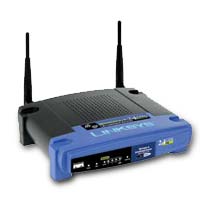
I'm living in a suburb, and 4 of my neighbors emit wireless signals, 2 of them which are completely unsecured. Just imagine how many of them you could pick up if you are living in a big city. People think that wireless connectivity is a dream come true, but most of them ignore the downside of the technology. The problem is that most AP come preconfigured with their security features turned off. A couple of steps have to be taken if you want to enable them. This simple security guide will show you how you can do it.
Change the default administrator password
Most routers or APs requires a default password to get in. Be sure to change it to something else, and it better not be your dog's name. Be warned that most APs default passwords are well known by villains, and can be easily found on the internet. Just try searching google for "linksys router default password", you'll see what I mean.
Turn off SSID broadcasting
First of all, what the heck is an SSID? The SSID (Service Set Identifier) is a sequence of up to 32 letters or numbers that represent the ID of your wireless network. the SSID is broadcasted from your AP to all wireless devices within range to let them know that he's available and ready to receive connections. If you shut off SSID broadcasting, the clients will have to know about the ID of the network if they want to be able to connect to it. Here is my opinion on SSID broadcasting, read it before proceeding with the rest of the article.
Enable MAC filtering
As you probably know, computers can be identified by many kinds of addresses. One of them, the MAC address, which is a unique ID tagged to your network card, can be specified in a list on the AP to prevent people that aren't on there from connecting to the network. MAC addresses can be spoofed, so this measure is not a guarantee of security, but it adds another door to your layered security architecture. To get your MAC address, just click on start->run, and type cmd. When you are at the DOS prompt, type: ipconfig /all, this will display the current configuration of you network card. The MAC address is what ipconfig displays as Physical Address. It consists of six pairs of numbers or letters, as in A6-33-F3-86-BE-04. When you are finished, type exit and you will get back to windows
posted by Blooger @ 10:34 PM
1 Comments


